
One of the most common things we hear from parents is: “It wasn’t like this when I applied to college.”
And honestly? They’re right.
Over the past decade (even the past few years!), the college admissions landscape has changed dramatically. Rising application numbers, test-optional policies, shifts in institutional priorities, and increased competition at selective colleges have all contributed to a process that feels much more unpredictable than it used to.
This can be confusing and frustrating for navigating college planning, whether your family is going through the process for the first time or having a different experience than you might have a few years ago when an older child applied. It’s especially difficult when students who seem highly qualified receive unexpected admissions decisions.
But understanding why and how admissions has changed can help families approach the process more strategically and with more realistic expectations.
This post is the first in our series on understanding the current college admissions landscape. In this series, we’ll cover:
How college admissions dramatically has changed over the last several years
Why college rankings lists can be misleading
Why strong students get rejected from selective colleges
Our goal isn’t to create fear around college admissions or discourage students from aiming high in their college search.
Instead, we want to help families better understand the current landscape before decisions arrive so they can build balanced college lists, approach the application process thoughtfully, and make informed decisions down the road.
Acceptance Rates Have Changed. Dramatically.
Probably the most obvious change in college admissions that families notice is how much more competitive admissions has become at many colleges and universities.
Colleges are receiving more applications than ever, with many schools breaking application number records year after year. In part, this is because students are now applying to more colleges than they did in previous generations. Online platforms like the Common App have made it easier to submit applications to a larger number of schools.
Test-optional admissions policies have also contributed to an increase in applications at many institutions, particularly highly selective colleges. Students who may not have applied previously because of test score concerns are now adding more selective colleges to their lists.
Of course, it’s not just highly selective colleges that are impacted. What type of college students seek for their college experience also changes over time. We are currently seeing a massive swell of interest in large, southern colleges. Students are flocking to the south for warm weather, strong athletics, and school spirit.
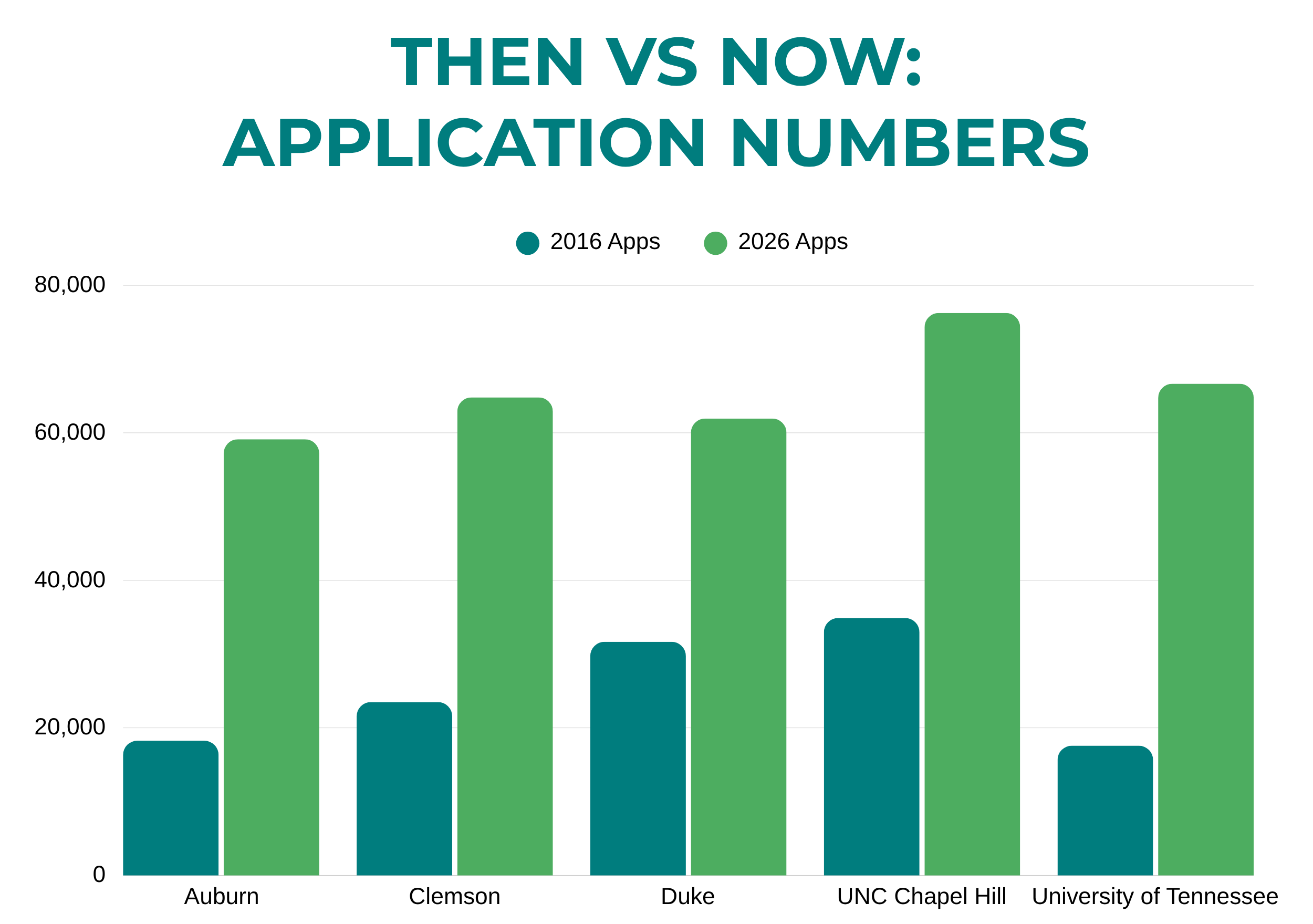
How does this impact the college admissions landscape?
Well, when application numbers go up, acceptance rates go down.
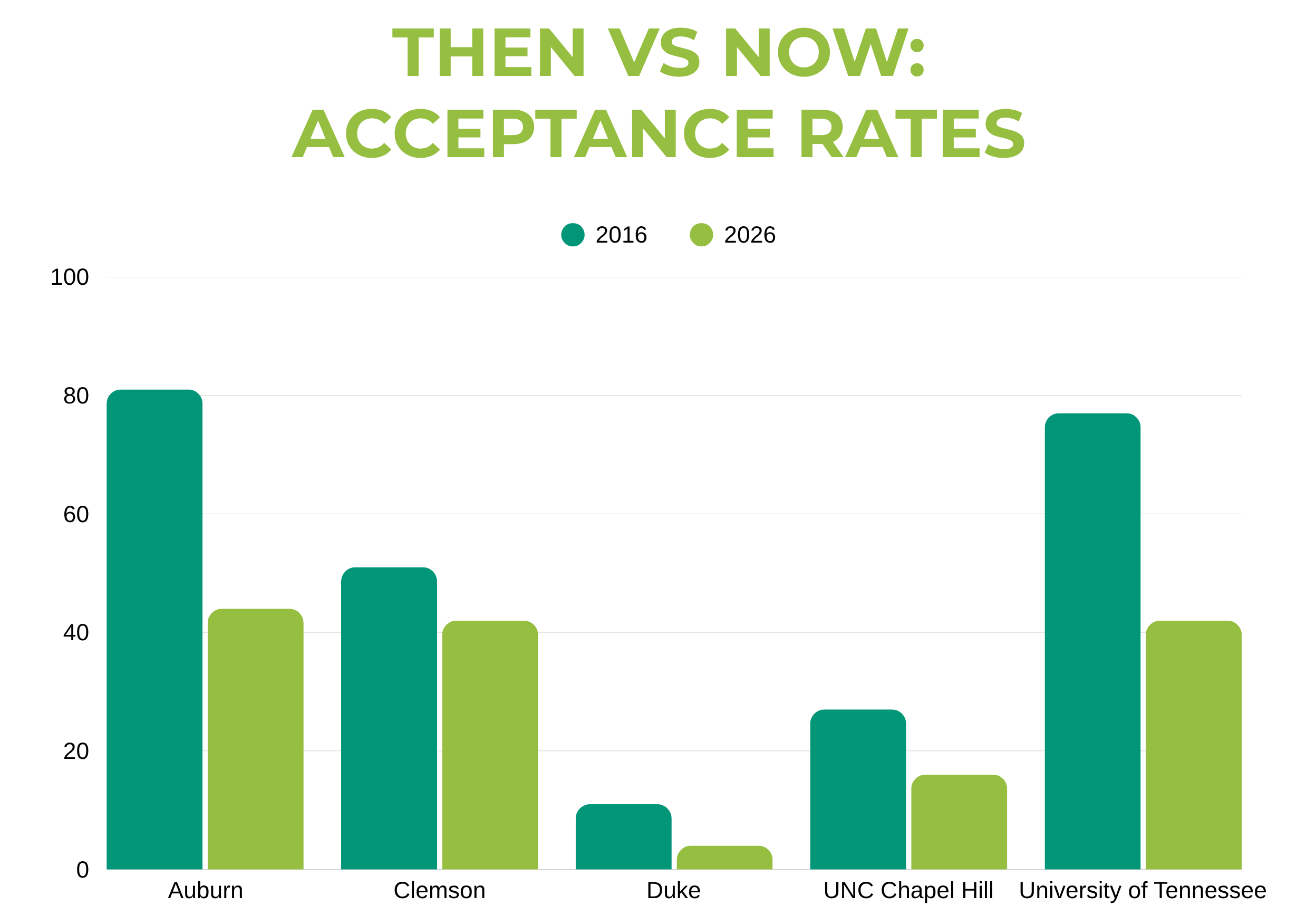
For families, this can create a disconnect between perception and reality. A college that may have once been considered a likely or target school for strong students may now be significantly more competitive.
It’s also important to understand that a lower acceptance rate does not necessarily mean a college suddenly became “better.” In many cases, it simply means:
more students applied
students applied to more schools overall
the institution became more nationally visible
Acceptance rates are just one piece of a much larger picture.
Strong Students Are Competing Against Other Strong Students
Often, one of the most difficult parts of college admissions for families to understand is this:
At highly selective colleges, most applicants are academically qualified for admission.
Students applying to these institutions often have:
Strong (even perfect!) GPAs
Challenging coursework
Impressive extracurricular involvement
Competitive (even perfect!) test scores
Many colleges are not choosing between “qualified” and “unqualified” applicants. Instead, they are often choosing between thousands of students who look similarly strong on paper.
As an example, assuming there are around 27,000 high schools in the United States, there are also around 27,000 seniors who are at the top of their class. If all 27,000 of those students applied to Harvard or UNC Chapel Hill, or even the University of Tennessee, each valedictorian would not be admitted.
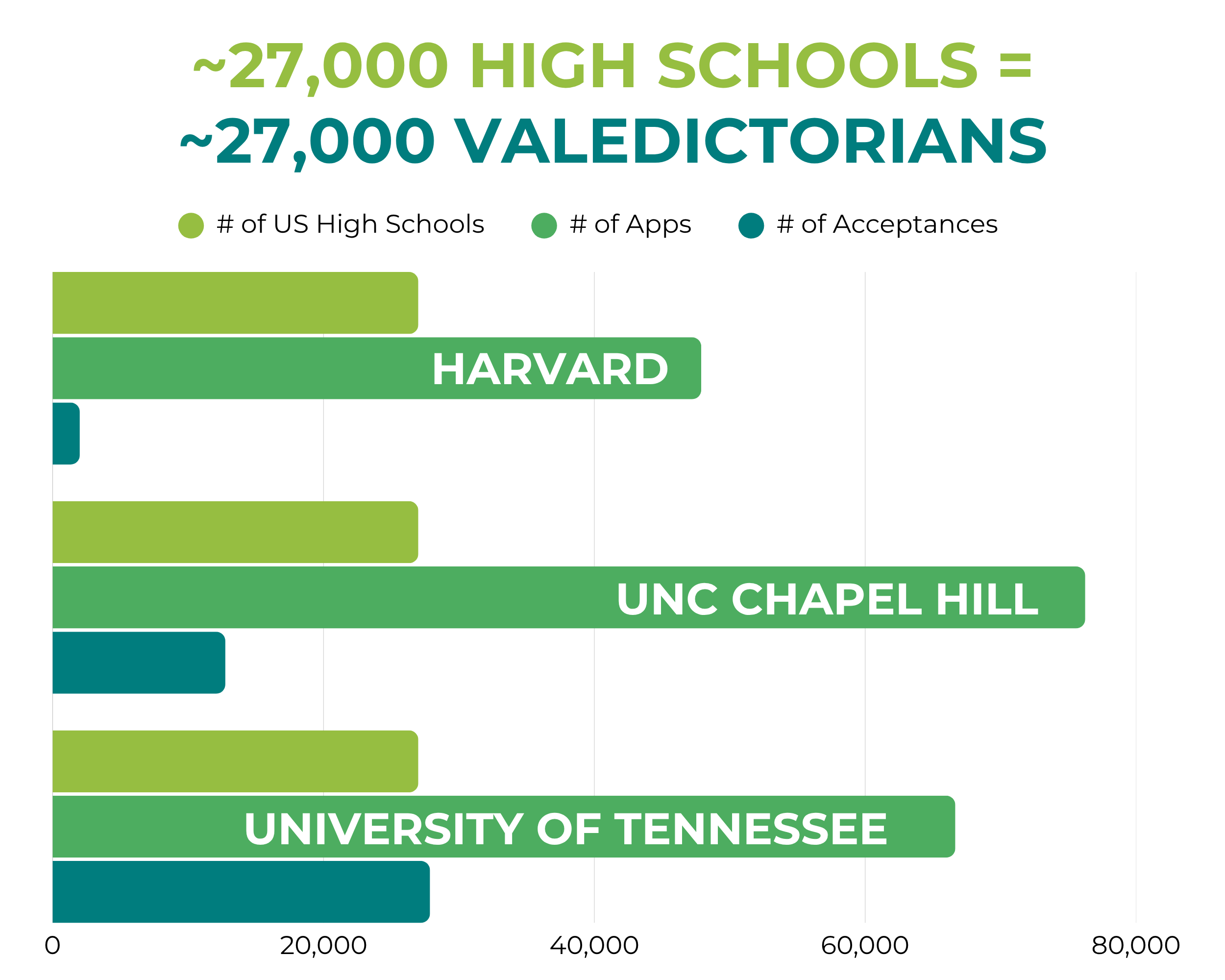
This is one reason why admissions outcomes can feel unpredictable, especially at highly selective schools or in competitive majors like engineering, computer science, nursing, or business.
A denial does not necessarily mean a student “wasn’t good enough.” Sometimes, it simply means there were far more qualified applicants than available spots.
This is also why building a balanced college list matters so much.
Many families understandably focus heavily on a small group of highly selective colleges, but admissions at those institutions can become difficult to predict for even the strongest students.
Colleges Are Building a Class, Not Ranking Applicants
Another major shift in admissions over the last decade that a significant percentage of colleges now practice holistic review. (What is holistic admissions? We’ve got you covered.)
But many parents assume the college admissions works something like this:
Colleges rank students by GPA and test scores
The students with the strongest numbers are admitted
Today, the process is often much more nuanced.
Colleges are not simply admitting students one statistic at a time. They are building an incoming class with a wide range of institutional priorities and goals.
These institutional priorities may include:
enrollment goals for specific majors
institutional mission and values
geographic diversity
first-generation college students
artistic talent
athletic recruitment
gender balance
demonstrated interest (at some colleges)
This does not mean academics no longer matter. Strong academic preparation remains the foundation of a successful college application.
But it does mean admissions decisions are influenced by factors families cannot always see from the outside.
Understanding this helps explain why two students with similar academic profiles may receive very different admissions results.
The Most Selective Colleges Represent a Tiny Slice of Higher Education
One challenge of modern-day college admissions is that families are constantly exposed to news and conversations about a relatively small group of ultra-selective colleges.
But it’s important to keep perspective: there are thousands of colleges and universities in the United States, and most admit a majority of applicants.
Keep in mind that most colleges offer:
excellent academics
strong career outcomes
undergraduate research
internship opportunities
supportive campus communities
Students do not need to attend an Ivy League or Top 20 university to have a successful future. (And remember, the Ivy League is just an athletic conference!)
In fact, one of the most important parts of the college planning process is identifying a good college fit. That means schools where a student will:
thrive academically
feel personally and socially supported
have access to meaningful opportunities
graduate with a manageable financial situation
This is why we spend so much time with families discussing fit, balance, and long-term goals (not just prestige or rankings).
What Students Can Control
One of the most helpful things families can do is focus on the parts of the process students actually can control.
Students cannot control:
institutional priorities
application volume
shifting admissions trends
acceptance rates
But they can control:
their academic performance
building a balanced college list
staying organized throughout the process
We go into greater detail on these topics in another blog post, What You Can & Can’t Control in College Admissions.
A successful college process is not about “gaming admissions.” It’s about understanding the landscape, making informed choices, and keeping options open.
Final Thoughts
The college admissions process has changed significantly over the past decade, and it’s understandable that many families feel overwhelmed by the current landscape.
But while admissions at some colleges have become more competitive and unpredictable, students still have many excellent opportunities available to them.
The key is approaching the process with:
realistic expectations
thoughtful planning
flexibility
perspective
This is one reason many families seek guidance during the college process. Not because every student needs an “Ivy League strategy,” but because understanding how admissions works today helps students and parents make calmer, more informed decisions.
In the next post in this series, we’ll take a closer look at one of the biggest drivers of admissions anxiety: college rankings… and why they may not tell the whole story.